One app to rule station operations

One app to rule station operations

How we designed Oscar, a unified tool that simplifies returns, preparation, and delivery for 10,000+ agents across 1,000+ locations.

How we designed Oscar, a unified tool that simplifies returns, preparation, and delivery for 10,000+ agents across 1,000+ locations.

One app to rule station operations

How we designed Oscar, a unified tool that simplifies returns, preparation, and delivery for 10,000+ agents across 1,000+ locations.

Project overview

Project overview

As part of Europcar’s global effort to digitalize rental station workflows, I led the design of OSCAR—a mobile-first operations app built from scratch to replace entirely paper-based processes with a single, real-time digital tool for frontline employees.

As part of Europcar’s global effort to digitalize rental station workflows, I led the design of OSCAR—a mobile-first operations app built from scratch to replace entirely paper-based processes with a single, real-time digital tool for frontline employees.

Previously, agents relied on printed forms and phone calls to coordinate tasks. There was no visibility into vehicle readiness, no proof of work for damage or cleanliness issues, and no structured communication between teams within the station.


We solved that providing these features:

Offline

Functionality, enabling use even in underground parkings with no signal

Offline

Functionality, enabling use even in underground parkings with no signal

Offline

Functionality, enabling use even in underground parkings with no signal

Proofs

Photo documentation for damage claims and cleanliness charges

Proofs

Photo documentation for damage claims and cleanliness charges

Proofs

Photo documentation for damage claims and cleanliness charges

Signature

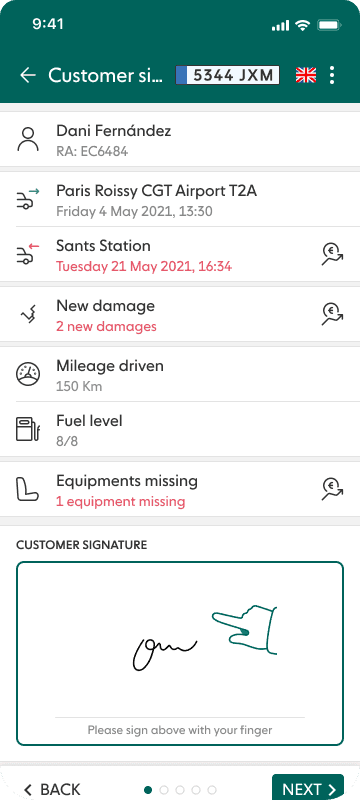
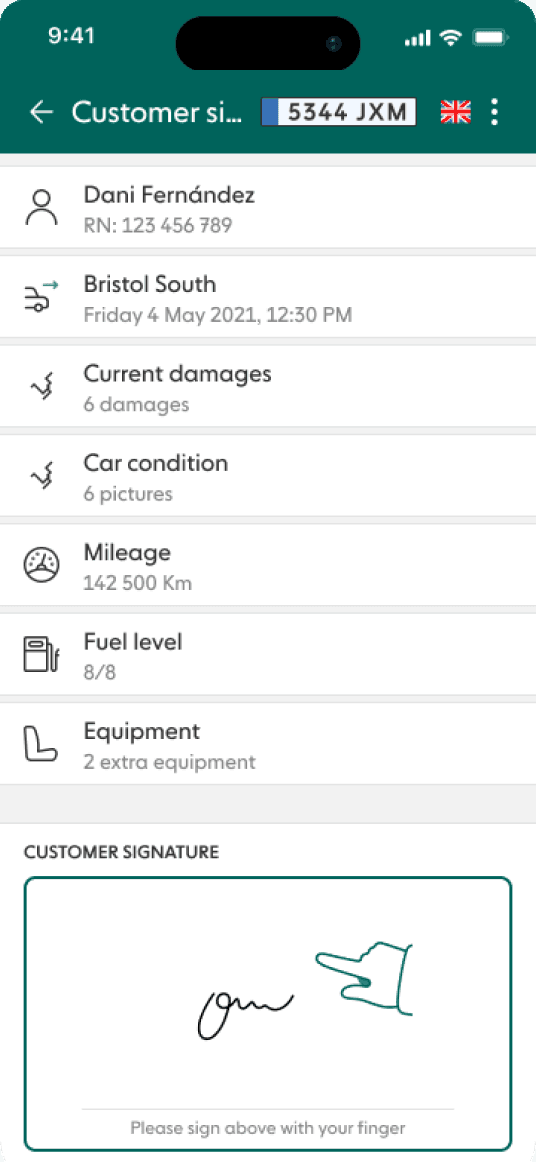
Customer signature directly on the app to finish the booking

Signature

Customer signature directly on the app to finish the booking

Signature

Customer signature directly on the app to finish the booking

Much more

A lot of new features that you'll see a long this case study

Much more

A lot of new features that you'll see a long this case study

Much more

A lot of new features that you'll see a long this case study

Role & Team

Role & Team

I served as the Lead Product Designer for OSCAR, owning the end-to-end design process from initial research through to rollout across 20+ countries.

My role required close collaboration not only with the core product squad, but also with local market stakeholders, country managers, and station staff to ensure the tool met real-world needs across a highly diverse operational network.

My key responsabilities

My key responsabilities

Defined the overall UX strategy and design roadmap in partnership with product and operations

  • Led field research across five key markets: Spain, France, Italy, Germany, and Portugal

  • Created user flows, journey maps, and service blueprints for all major workflows

  • Designed all interface components in Figma—from early concepts to polished UI

  • Built interactive prototypes for testing and stakeholder alignment

  • Conducted usability tests with station agents under real-world conditions

  • Provided continuous design support to developers during implementation

We worked in agile sprints with continuous delivery and weekly feedback loops from the field. I acted as a bridge between technical and non-technical stakeholders, ensuring that frontline realities were translated into scalable, usable solutions.

We worked in agile sprints with continuous delivery and weekly feedback loops from the field. I acted as a bridge between technical and non-technical stakeholders, ensuring that frontline realities were translated into scalable, usable solutions.

My key responsabilities

Defined the overall UX strategy and design roadmap in partnership with product and operations

  • Led field research across five key markets: Spain, France, Italy, Germany, and Portugal

  • Created user flows, journey maps, and service blueprints for all major workflows

  • Designed all interface components in Figma—from early concepts to polished UI

  • Built interactive prototypes for testing and stakeholder alignment

  • Conducted usability tests with station agents under real-world conditions

  • Provided continuous design support to developers during implementation

  • Introduced PostHog analytics to capture product usage and guide iteration post-launch

Target audience

The primary users of OSCAR are Europcar station agents—frontline employees responsible for the full lifecycle of vehicle management: returns, preparation, and handovers.

Their work is fast-paced, highly operational, and often performed in challenging environments such as underground parking lots, outdoor lots, or high-traffic airport terminals.

Primary users

Primary users

  • Vehicle return agents

  • Prep/cleaning coordinators

  • Delivery & collection staff

  • Station shift leads


These users needed a tool that was fast, clear, and responsive—something that could replace paper, radios, and memory with structured workflows and real-time updates.

Secondary users

Secondary users

  • Station managers – oversee daily operations and task distribution

  • Country ops teams – ensure compliance, analyze performance, and scale best practices

  • Fleet stakeholders – monitor vehicle readiness, damage tracking, and turnaround times

Discovery

Discovery

From day one, we knew this wasn’t just a UX project—it was a service design transformation. Our mission wasn’t to digitize a screen, but to untangle an invisible web of habits, paper trails, and team dynamics that varied from one station to another.

To do this, I designed a multi-layered discovery plan that combined on-site ethnography, behavioral research, and co-creation:

From day one, we knew this wasn’t just a UX project—it was a service design transformation. Our mission wasn’t to digitize a screen, but to untangle an invisible web of habits, paper trails, and team dynamics that varied from one station to another.

To do this, I designed a multi-layered discovery plan that combined on-site ethnography, behavioral research, and co-creation:

On site immersion

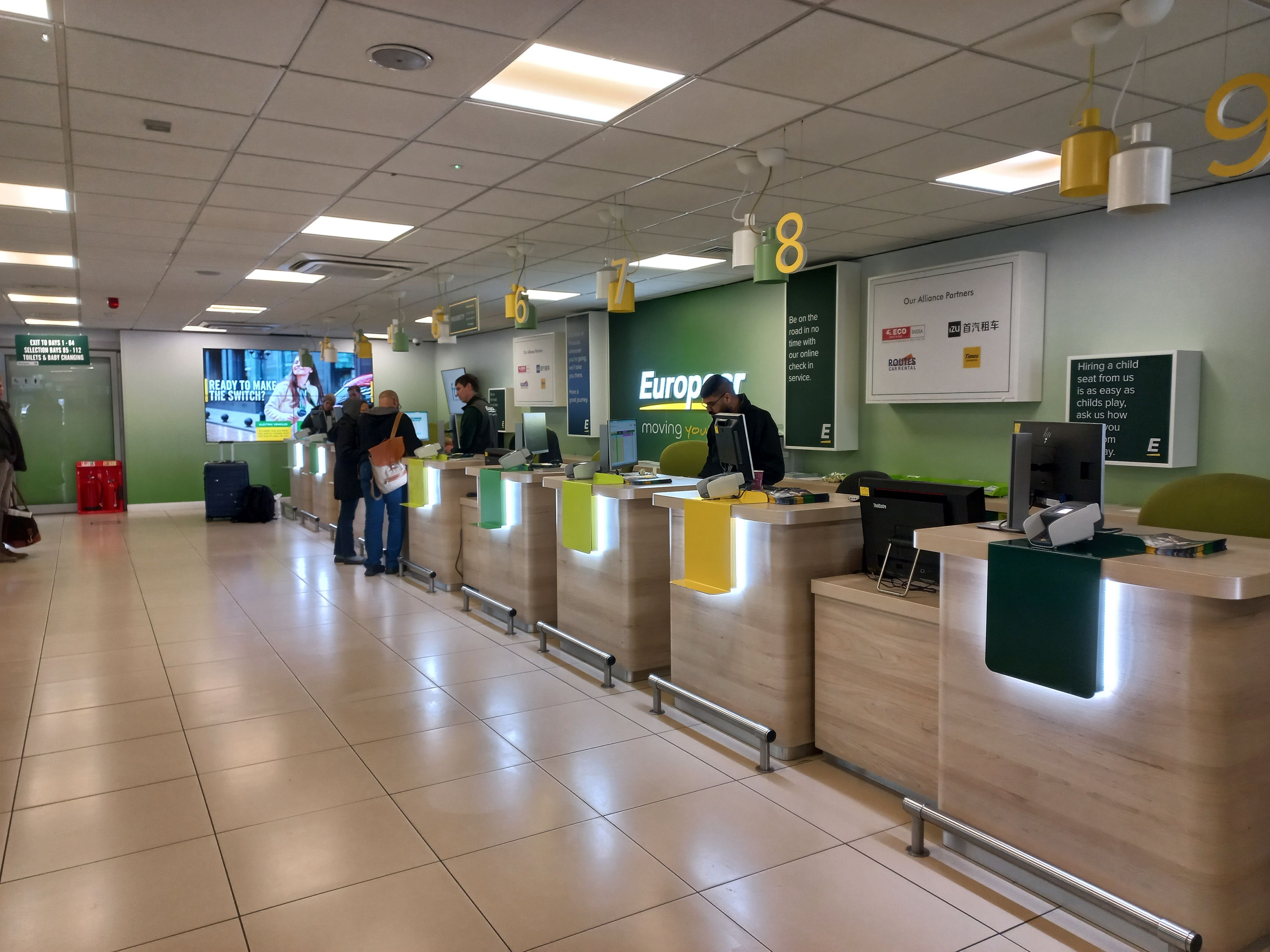
To design a tool agents would actually use—and trust—we had to go far beyond user stories and requirements documents. We spent time on the ground, embedded in the daily realities of Europcar stations across five countries.

To design a tool agents would actually use—and trust—we had to go far beyond user stories and requirements documents. We spent time on the ground, embedded in the daily realities of Europcar stations across five countries.

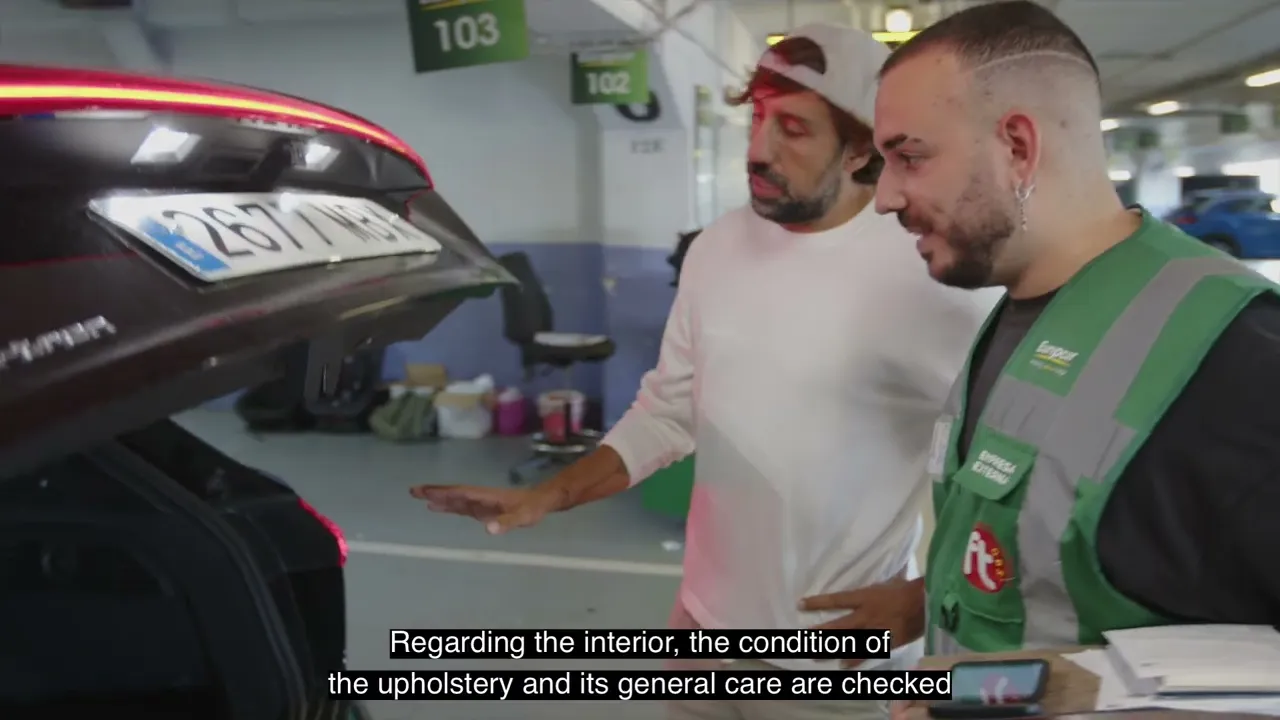
This in-field work gave us firsthand exposure to the messiness of reality: paper taped to dashboards, undocumented hacks, overlapping responsibilities, and the emotional load of working under pressure.These insights became the foundation for every decision we made—ensuring that OSCAR wasn’t just functional, but actually helpful and usable in the unpredictable, physical world of vehicle rental logistics.

This in-field work gave us firsthand exposure to the messiness of reality: paper taped to dashboards, undocumented hacks, overlapping responsibilities, and the emotional load of working under pressure.


These insights became the foundation for every decision we made—ensuring that OSCAR wasn’t just functional, but actually helpful and usable in the unpredictable, physical world of vehicle rental logistics.

Gradient 2 - Purple
Shadowing in UK & Germany

Mapping the journey

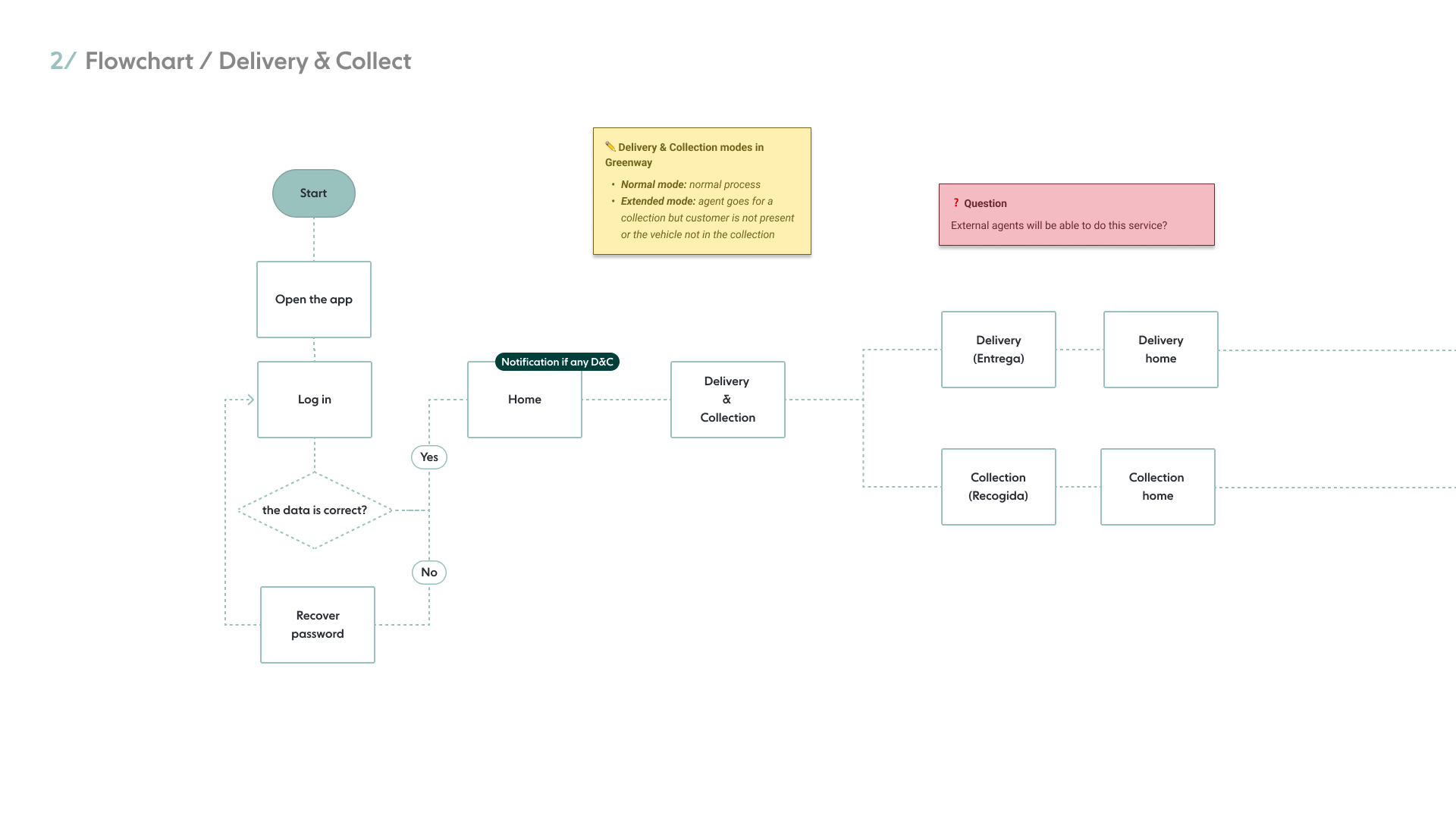
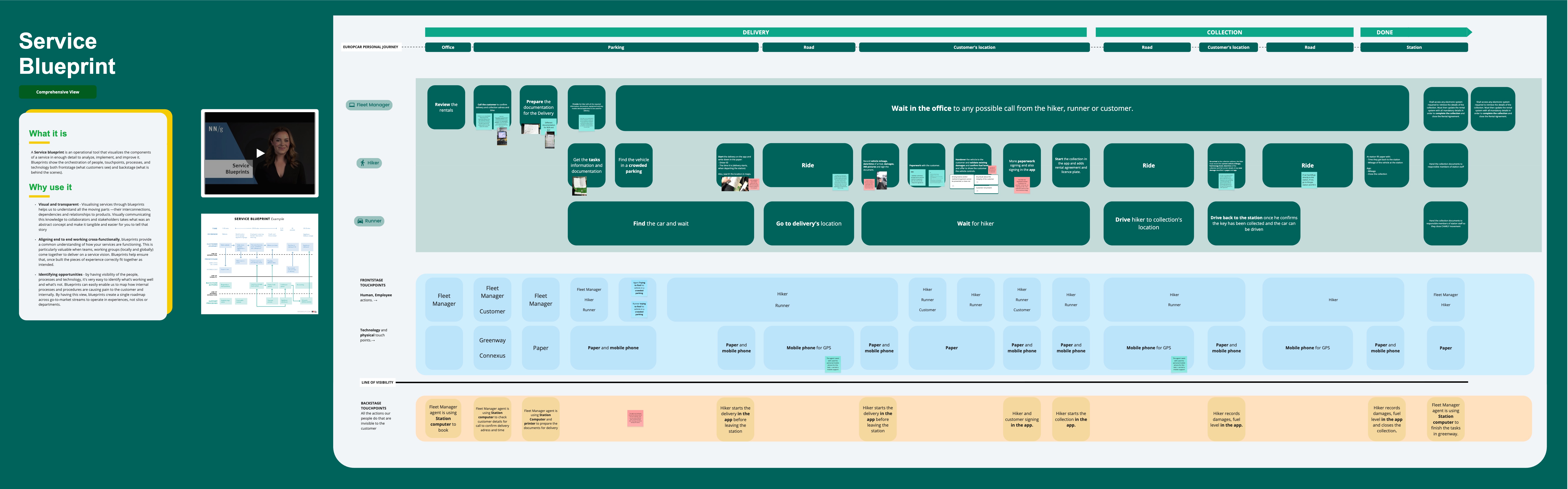
After weeks of field research, interviews, and shadowing sessions, we consolidated our findings into visual maps that captured the complexity of Europcar’s station operations. These artifacts helped us bridge the gap between what we saw on the ground and what needed to be designed.

After weeks of field research, interviews, and shadowing sessions, we consolidated our findings into visual maps that captured the complexity of Europcar’s station operations. These artifacts helped us bridge the gap between what we saw on the ground and what needed to be designed.


These maps became living documents—referenced throughout the project to validate decisions, track gaps, and onboard new collaborators. Most importantly, they grounded our design process in reality, ensuring that what we built matched the actual rhythm and constraints of station work.

These maps became living documents—referenced throughout the project to validate decisions, track gaps, and onboard new collaborators. Most importantly, they grounded our design process in reality, ensuring that what we built matched the actual rhythm and constraints of station work.

Gradient 1 - Blue
Gradient 1 - Blue

Findings

Our discovery process surfaced a wide range of behavioral, operational, and systemic insights. These findings became the foundation for OSCAR’s design strategy and product vision.

Our discovery process surfaced a wide range of behavioral, operational, and systemic insights. These findings became the foundation for OSCAR’s design strategy and product vision.


Here are the most critical ones:

Here are the most critical ones:

No two stations operated
the same way

No two stations operated
the same way

Everything was offline,
even the tools

Everything was offline,
even the tools

Agents relied on workarounds
to stay afloat

Agents relied on workarounds
to stay afloat

No task visibility or ownership

No task visibility or ownership

Damage and cleanliness
issues lacked proof

Damage and cleanliness
issues lacked proof

Lack of operational
data for the business

Lack of operational
data for the business

Opportunities

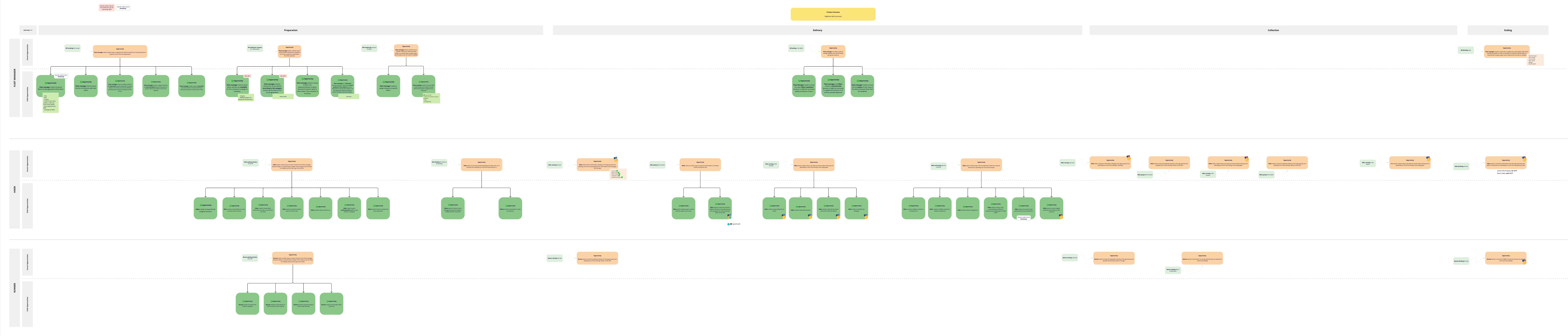
Once we had a clear view of the current-state workflows and pain points, the next step was to translate insights into action. To do this, we used the Opportunity Tree methodology—a structured way to move from observed problems to potential solutions without jumping to features too soon.

The result was a visual model that guided both product and design decisions, kept discussions user-focused, and made it easier to explain trade-offs to stakeholders. The Opportunity Tree ensured that every design decision was rooted in a validated need, not an assumption or stakeholder request.
Gradient 1 - Blue
Opportunity tree

Alignment

Operating across 20+ countries and multiple brands, Europcar’s station network was anything but uniform. Each market had its own way of handling core workflows like vehicle return, preparation, and delivery. Roles, terminology, and even the definition of task completion varied from one location to another. While headquarters pushed for visibility, standardization, and efficiency, local teams prioritized autonomy, speed, and adapting to on-the-ground realities. These disconnects created tension—not just in process, but in language, expectations, and metrics. Aligning on a shared understanding of the problem space was just as important as aligning on the solution.

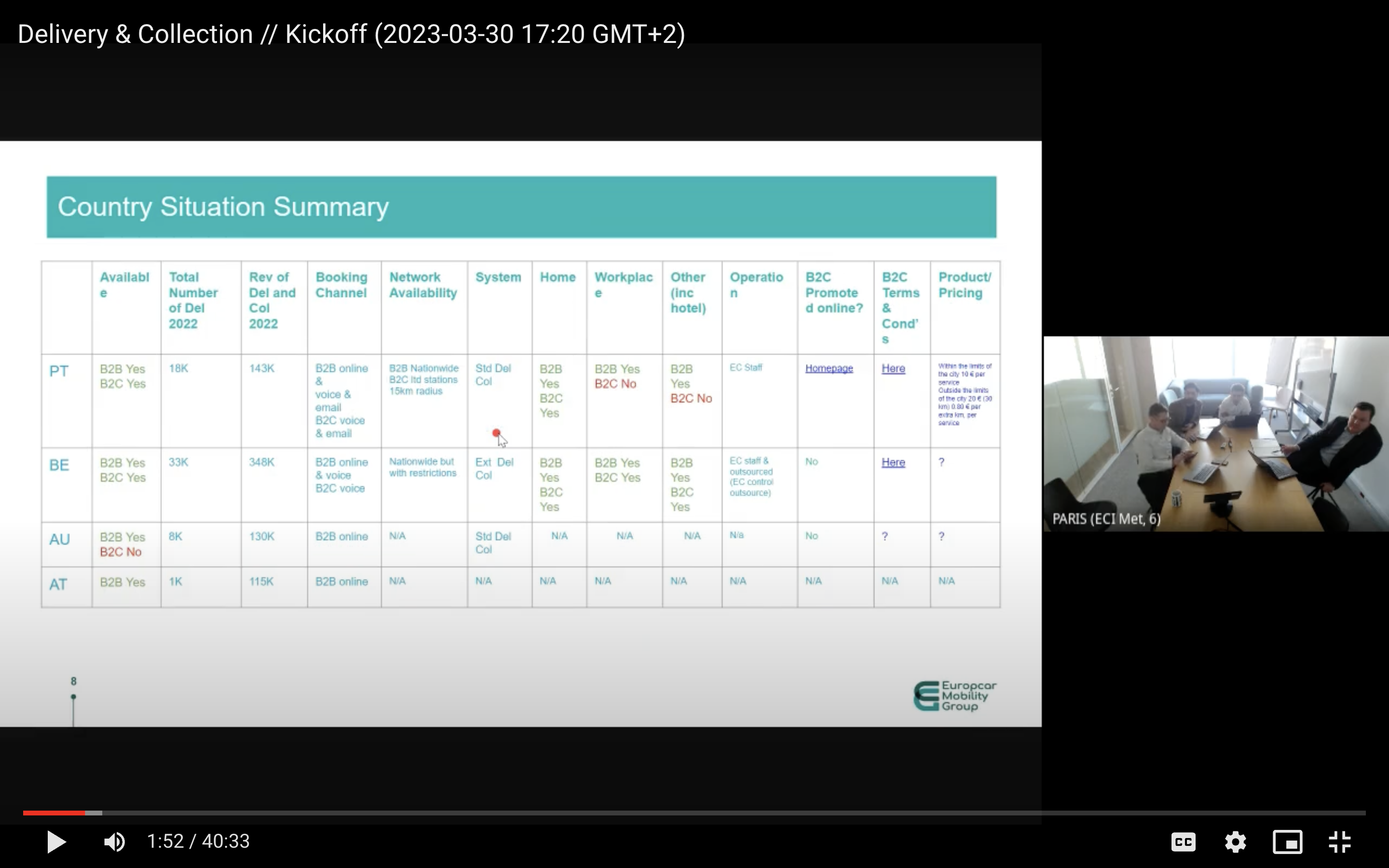
To bridge these gaps, we facilitated continuous alignment between business stakeholders, country managers, and frontline users. We ran co-creation sessions with local teams, mapped workflows across markets, and used visual tools like service blueprints and flowcharts to ground conversations in shared understanding. At the same time, we worked closely with operations and product leadership to connect field insights to business KPIs. This helped us prioritize features that balanced standardization with flexibility—building a tool that respected local differences without fragmenting the product. Alignment wasn’t a phase—it was a parallel track that ran throughout the entire design and delivery process.
Gradient 1 - Blue
Alignment meetings with stakeholders

Testing

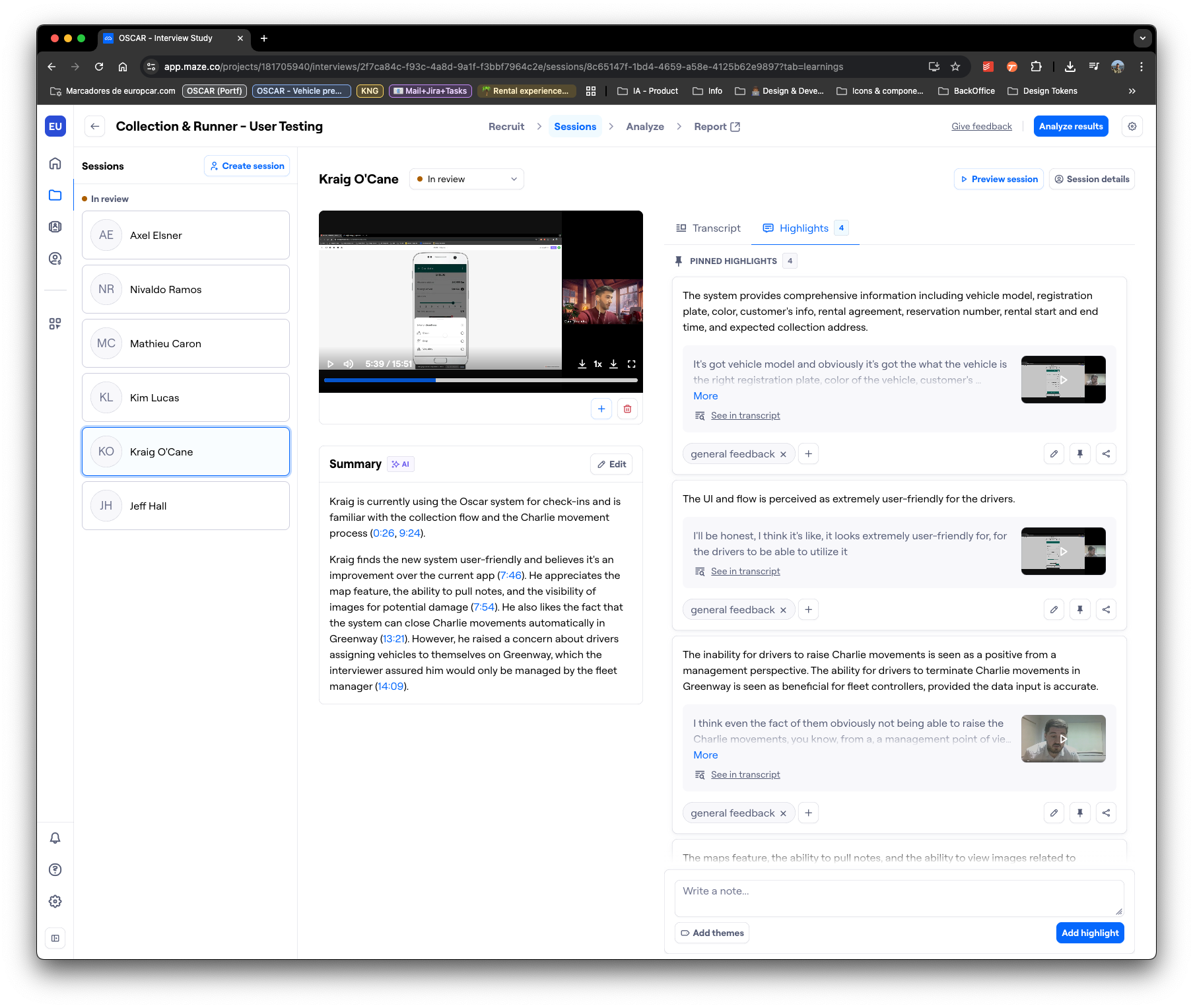
Designing OSCAR meant solving not just for users, but for a highly decentralized organization operating across 20+ countries, multiple brands, and countless local variations. To ensure the product could scale, we worked continuously to align with both central business goals and local operational realities.

This ongoing alignment helped reduce resistance, build buy-in, and ensure that OSCAR could serve as a single operational layer—even in a landscape of fragmented practices.
Gradient 1 - Blue
Tetings done through maze & in person

Refining

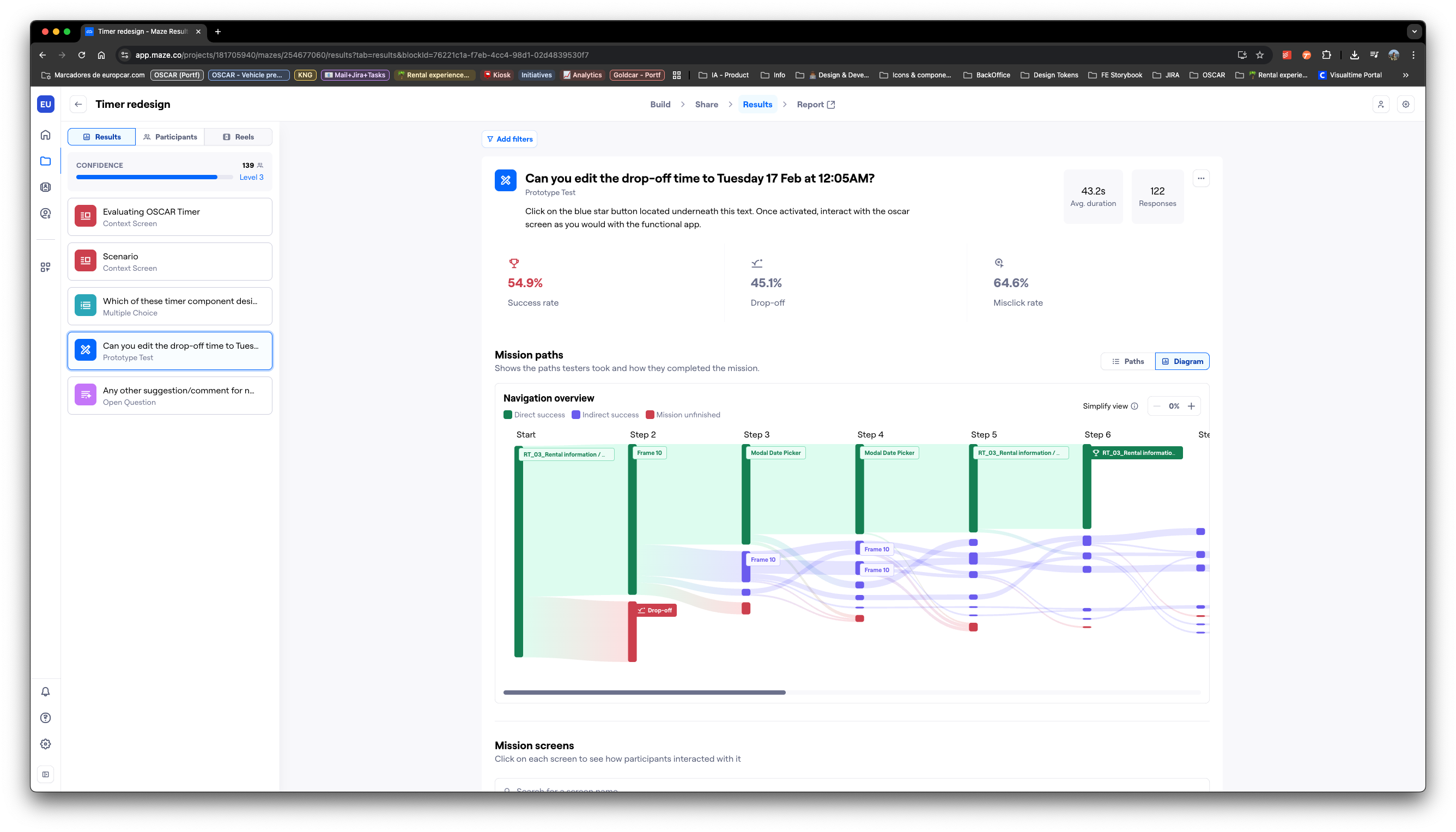
Designing OSCAR didn’t stop at launching wireframes—it was a continuous process of refining, validating, and evolving the product in close collaboration with real users. Every workflow had to perform under real-world pressure: noise, weather, time constraints, and unpredictable edge cases.

This refinement phase helped ensure that OSCAR wasn’t just “usable” but trusted and relied upon—not because it was perfect, but because it kept improving in response to how people actually worked.
Gradient 1 - Blue

Challenges

Challenges

Designing and rolling out OSCAR meant rethinking critical operational workflows across 20+ countries, each with its own constraints, habits, and regulations.

While the design vision was clear, the path to execution came with significant challenges—technical, organizational, and environmental.

Designing and rolling out OSCAR meant rethinking critical operational workflows across 20+ countries, each with its own constraints, habits, and regulations.

While the design vision was clear, the path to execution came with significant challenges—technical, organizational, and environmental.

Legacy

Connection

Contact

Design

Adoption

Legacy environment

Old database and operation system

Each station had “its own way” of doing things, from task handoffs to terminology. Standardizing these while respecting local realities was a constant balancing act.

How we addressed it:

We mapped divergent workflows and designed for flexibility within guardrails—supporting variations without overcomplicating the UI. Service blueprints helped align stakeholders on what needed to be consistent.

Legacy

Connection

Contact

Design

Adoption

Legacy environment

Old database and operation system

Each station had “its own way” of doing things, from task handoffs to terminology. Standardizing these while respecting local realities was a constant balancing act.

How we addressed it:

We mapped divergent workflows and designed for flexibility within guardrails—supporting variations without overcomplicating the UI. Service blueprints helped align stakeholders on what needed to be consistent.

Legacy

Connection

Contact

Design

Adoption

Legacy environment

Old database and operation system

Each station had “its own way” of doing things, from task handoffs to terminology. Standardizing these while respecting local realities was a constant balancing act.

How we addressed it:

We mapped divergent workflows and designed for flexibility within guardrails—supporting variations without overcomplicating the UI. Service blueprints helped align stakeholders on what needed to be consistent.

Let's dive into the solution

Let's dive into the solution

Let's dive into the solution

One app to rule them all

SCAR

Digital

Digital

Digital

operations

experience.

operations

experience.

operations

experience.

Main modules

Vehicle return

Start by scanning the vehicle upon arrival. The return module guides agents through checks, photos, and notes—making the process fast, consistent, and fully traceable.

Delivery & collection

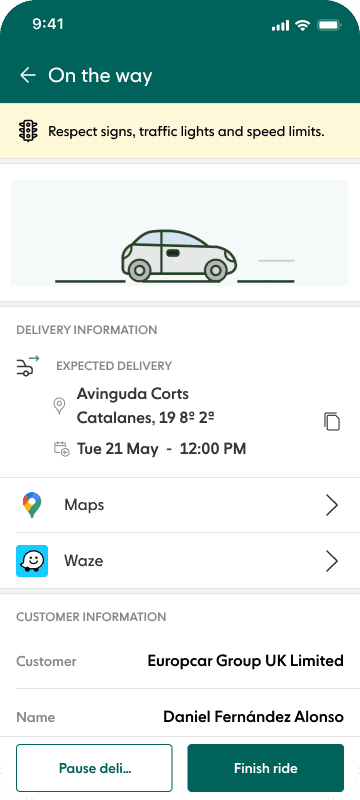
The module streamlines handovers and pickups with guided steps, digital signatures, and real-time status updates.

Vehicle preparation

This module ensures each vehicle is ready for the next customer—clean, safe, and up to standard.

Vehicle return

Start by scanning the vehicle upon arrival. The return module guides agents through checks, photos, and notes—making the process fast, consistent, and fully traceable.

Delivery & collection

The module streamlines handovers and pickups with guided steps, digital signatures, and real-time status updates.

Vehicle preparation

This module ensures each vehicle is ready for the next customer—clean, safe, and up to standard.

Vehicle return

Start by scanning the vehicle upon arrival. The return module guides agents through checks, photos, and notes—making the process fast, consistent, and fully traceable.

Delivery & collection

The module streamlines handovers and pickups with guided steps, digital signatures, and real-time status updates.

Vehicle preparation

This module ensures each vehicle is ready for the next customer—clean, safe, and up to standard.

key features

Vehicle identification

A vehicle identification screen provides two options: manually entering the license plate number or the unique VIN/VUN code. Users can further utilize an integrated OCR camera to automatically capture the license plate, saving time and minimizing errors compared to manual input. This design offers flexibility and efficiency in identifying vehicles.

Rental Agreement info

Overview of the rental agreement within the app. This includes details like rental dates, vehicle information, and contact details. This allows to easily track the rental and see if the return has been done on time.

Standardized damage assessment

Facilitate consistent and efficient damage assessment through standardized protocols and digital recording within the service.

Fuel level, mileage and cleanliness tracking

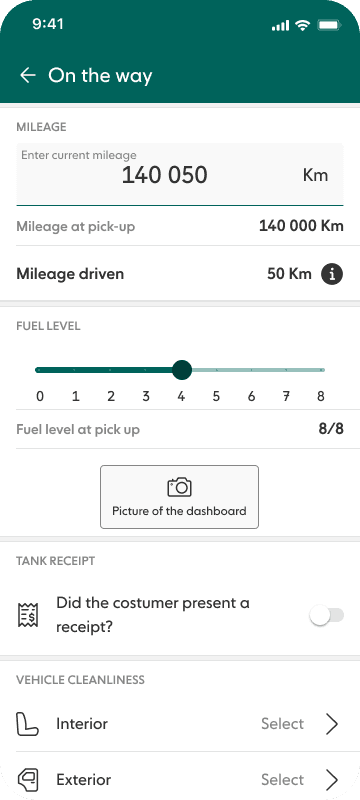
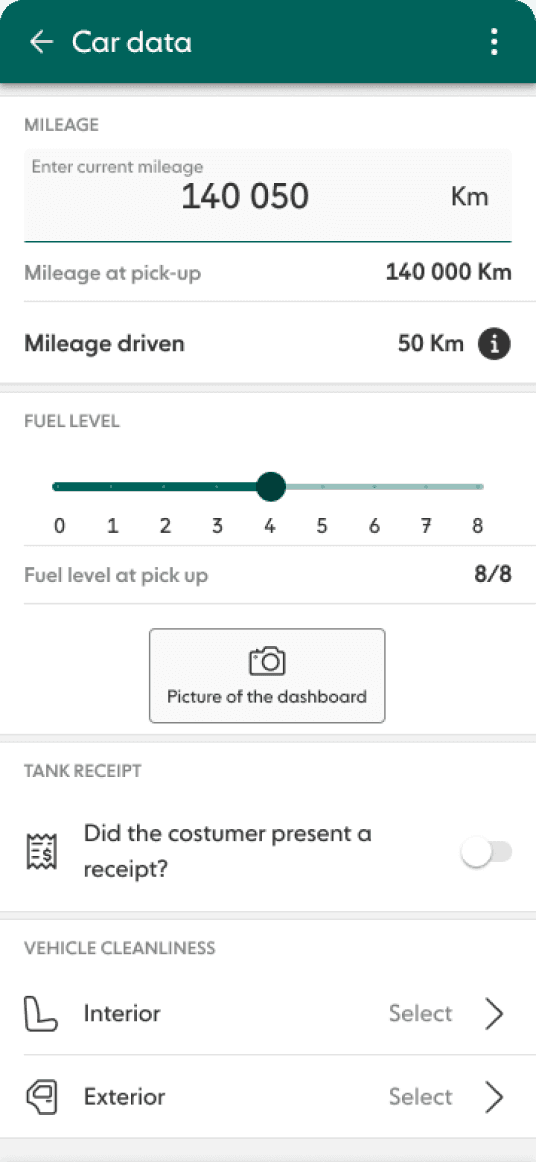
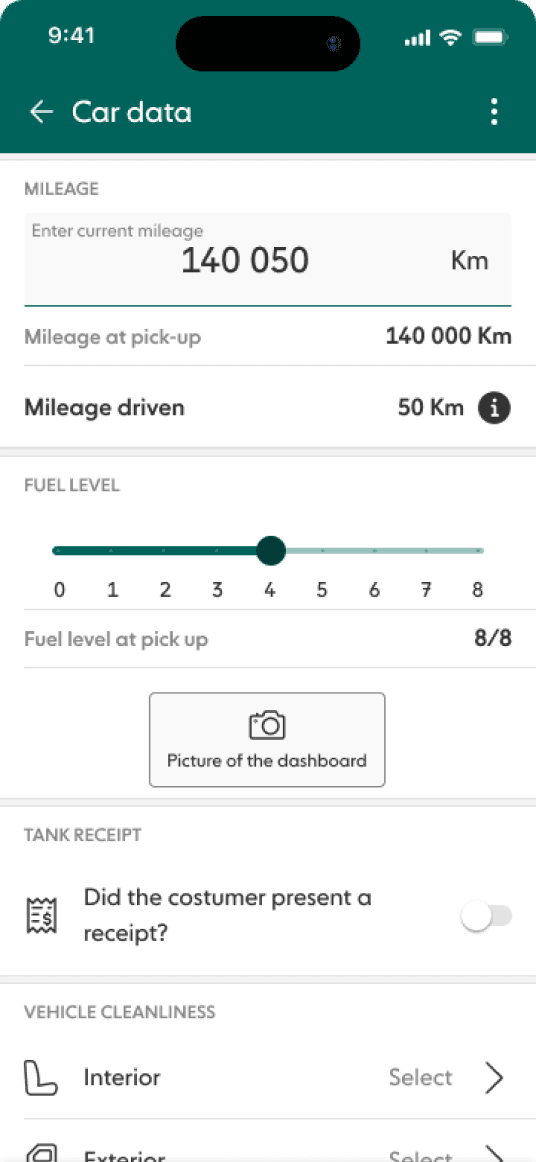
Integrate automated fuel level and mileage recording capabilities, ensuring accurate data capture and eliminating manual processes.

Summary

Upon returning the rental, the client will be presented with a summary of the completed rental agreement, including key details added such as damage assessments. They can then review the information, ask any questions, and sign to finalize the closure.

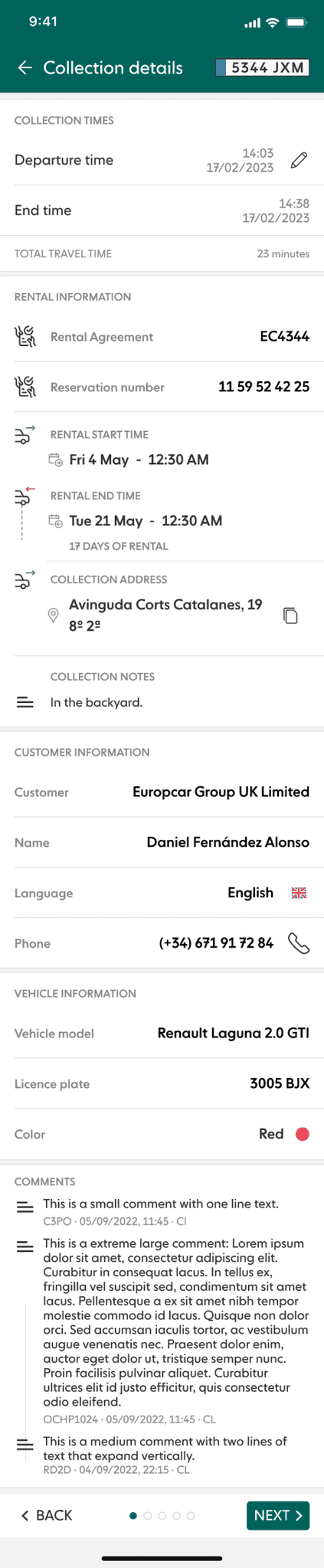
All delivery and collection operation information at one finger tap

All delivery and collection operation information at one finger tap

Results & impact

Results & impact

After launching OSCAR across 1,000+ Europcar stations in over 20 countries, the platform quickly became the operational backbone for vehicle management. The rollout not only achieved its measurable business goals, but also transformed the daily work of thousands of employees.

+1M€
+1M€

Savings

+12
+12

Countries

+12

Countries

+0K
+0K

Users

+0K
+0K

Stations

Learnings and reflections

Learnings and reflections

After launching OSCAR across 1,000+ Europcar stations in over 20 countries, the platform quickly became the operational backbone for vehicle management.

The rollout not only achieved its measurable business goals, but also transformed the daily work of thousands of employees.

After launching OSCAR across 1,000+ Europcar stations in over 20 countries, the platform quickly became the operational backbone for vehicle management.

The rollout not only achieved its measurable business goals, but also transformed the daily work of thousands of employees.

Main takeaways

Main takeaways

Designing for reliability and clarity was more valuable than adding features—agents embraced the tool because it reduced friction, not because it was “smart.”

Offline support and real-time status became core, trust-builders. Users need to feel the system won't fall them under pressure.

Field research was non-negotiable—many of the real constraints (sunlight, gloves, no Wi-Fi, team dynamics) only became clear on-site, not in workshops or remote interviews.

What went well

What went well

Cross-functional collaboration with country managers, agents, backend teams, and operations stakeholders created strong alignment and smooth rollout despite cultural and operational differences.

Designing with station staff, not for them made a huge difference. Co-creation early on turned skeptical users into champions.

The mobile-first, visual, and icon-led interface supported quick adoption across agents with different digital skill levels and language backgrounds.

What could be improved

What could be improved

More structured ethnographic research would have helped uncover subtle behaviors like handoff rituals or informal hacks that influenced design success.

Testing environments varied wildly—having better access to real devices and offline simulation environments would have made QA and field testing more consistent.

Personal growth

Personal growth

This project deepened my skills in service design thinking, where flows didn’t end at the screen—they started with people, places, and physical realities.

I grew more confident facilitating multi-country alignment, adapting design strategy across markets without compromising usability.

Working solo on design forced me to build resilient, reusable systems—a foundation I now use in every project involving scale and ambiguity.

Money

Get paid on-demand and make saving second nature.

Break free from pay cycles with InstaPay—the flexible, credit-free way to get paid

Score your own Swag Visa Debit card and Swag Spend account

Shop with Google Pay or Apple Pay

Learn More

Dani

Last updated Nov. 2025

Let's make something together

I am a digital product designer specialised in apps and web applications. Feel free to send me a message for possible collaborations, new connections, or projects.

Dani

Last updated Nov. 2025

Let's make something
together

I am a digital product designer specialised in apps and web applications. Feel free to send me a message for possible collaborations, new connections, or projects.

Dani

Last updated Nov. 2025

Let's make something together

I am a digital product designer specialised in apps and web applications. Feel free to send me a message for possible collaborations, new connections, or projects.

Target audience

The primary users of OSCAR are Europcar station agents—frontline employees responsible for the full lifecycle of vehicle management: returns, preparation, and handovers.

Their work is fast-paced, highly operational, and often performed in challenging environments such as underground parking lots, outdoor lots, or high-traffic airport terminals.

Primary users

  • Vehicle return agents

  • Prep/cleaning coordinators

  • Delivery & collection staff

  • Station shift leads


These users needed a tool that was fast, clear, and responsive—something that could replace paper, radios, and memory with structured workflows and real-time updates.

Secondary users

  • Station managers – oversee daily operations and task distribution

  • Country ops teams – ensure compliance, analyze performance, and scale best practices

  • Fleet stakeholders – monitor vehicle readiness, damage tracking, and turnaround times

Create a free website with Framer, the website builder loved by startups, designers and agencies.